What types of foods can I put in here?
Absolutely:
All veggies and fruit scraps. Coked or uncooked. Paper waste, napkins, pizza boxes (tear them up). Breads and pastas in small amounts. (don’t chuck a whole loaf in – lets be reasonable)
Egg shells, tea bags, coffee grounds.
Be careful:
Cooked meat and bird-bones i.e chicken. Very small pieces of cooked meat can go in there. Many will say to avoid this, but it’s 100% okay, provided you aren’t chucking in half a cow or a whole chicken.
Harder waste like corn cobs, nut shells, avocado pips can go in, but they take a long time to break down. How you can increase the breakdown time is by chopping up the food waste before it goes in there.
No:
Raw meat, animal bones, dairy, oil
It’s important to note that throwing in whole foods will take longer to breakdown. It’s always a good idea to chop up your food waste into smaller pieces.
What actually happens to the food-scraps?
The micro-organisms and earthworms eat the food scraps. They then poop. What they poop is what we want. That is the VermiCompost. It’s black gold for plants.
Will I have to get my hands dirty or touch any icky stuff?
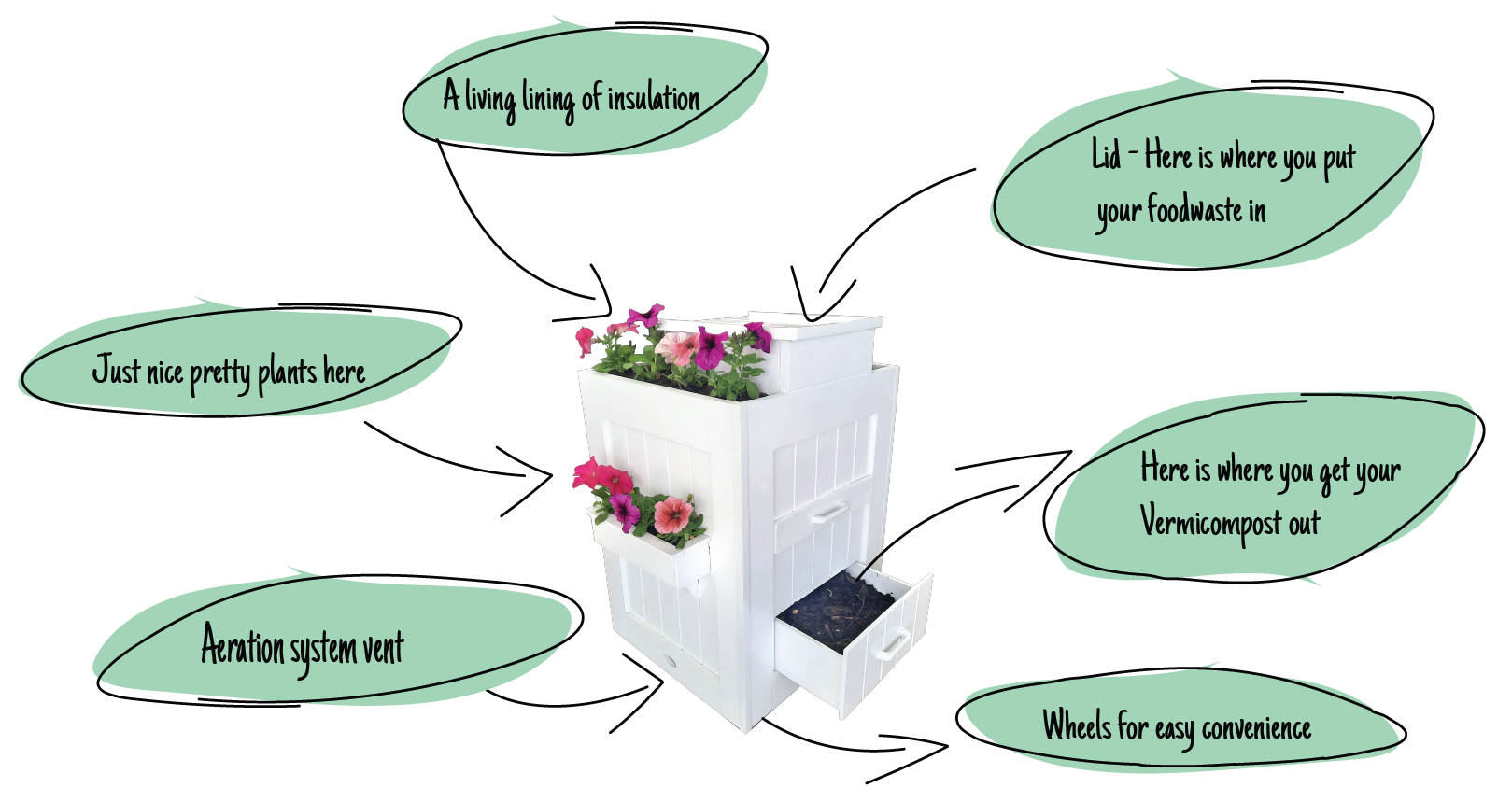
Nope. You remove the VermiCompost via the draw and throw it in your garden. No need to get your hands dirty.
Will there be any strange smells from this?
Nope. Food waste acts differently in this bin. It doesn’t rot. It decomposes into soil.
Is this safe? Natural?
This process is 100% natural, 100% safe, 100% organic and 100% the way we should be doing things.
Should I put the bin indoors or outdoors?
You can put it either indoors or outdoors. It’s very well insulated so the bin can handle weather conditions, ranging from 0 – 35 degrees celcius.
Do I need to buy things on a monthly basis for this system?
Nope. Earthworms are self sustaining. Provided you feed the worms they will remain alive and multiply and continuously feed on your food.
Will the system survive if I go away?
Absolutely yes. Once the system is established, you can leave the system for up to 6 months and it will survive.
Do I need to water this?
The system has been designed that when you water the plants, it waters the system.
How much food can I put in here:
The bin can handle a capacity if 2.5kg of food per week.
Is this the same as composting?
Not really. Classic composting uses only microorganisms. This uses earthworms and the product you get from the systems in vermi-compost. Which is not the same as compost.
Is this the same as the bokashi method?
No. the Bokashi method uses an anerobic method.
Will it attract insects?
The system has been designed that no insects can get into it. But often fruit flies have laid their eggs on your food waste prior to you throwing it away.
Can I put liquids in here?
No. Pour those down the drain.
What plants can I plant in the bin?
Any plants you want.